
Keep reading to find out how to check car fluids. Car fluids are essential for every vehicle, as each of them serves a purpose.
The engine fluid cools the engine and lubricates the engine to avoid friction of moving parts. Friction leads to wear and it damages the engine.
I see the car fluids as the blood and water of the human body which can’t function without it. With this being said you need to know how to check car fluids which we’ve compiled in this blog post.
Explore The city of Dhaka with Quickridz.
How To Check Car Fluids
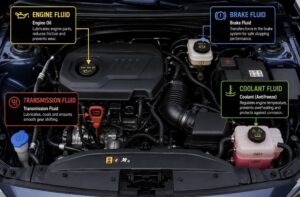
Checking fluids in car can be a bit confusing for new car owners. The following are the fluids to check in car (Engine fluid, Brake fluid, transmission fluid and coolant fluid).
To check car engine fluid level:
- Turn off your car using your car key or press the Start / Stop button to switch off the engine.
-
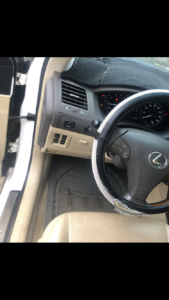
Plastic Hood release lever - Lift the plastic bonnet release lever to pop the bonnet open. The plastic is usually located under the dashboard or close to the left foot at the driver’s side.
- Go to the front of your vehicle, but note that the bonnet won’t open easily until you unhook the secondary latch from the bonnet.
- Slightly lift the bonnet then use your hand to shift the secondary latch to completely lift the bonnet up.
- Now to check the car fluids, you will need to differentiate between the engine fluid, transmission fluid, and brake fluid.
- To check the car engine fluid, the dipstick tube leads inside the engine and close to the generator (alternator). The handle of the dipstick is often yellow or orange in color and may have an image of an oil can or the text “ENGINE OIL” written on it.
- Now remove the dipstick, then clean it and reinsert the dipstick to check the level of the engine fluid.
- Here you will see two markings on the dipstick which indicates the minimum and maximum fluid level. The top one is the max level and the one below is the min level.
- IF your engine fluid is the the minimum level then you need to top it up while a dark engine oil means your car maybe due for service or there is a leakage somewhere. While the maximum level indicates that your car is gauged and oil is sufficient.
To check the car transmission fluid level:
- Press the Start / Stop button or insert the car key to switch off the car engine.
- Lift the plastic hood release lever located under the dashboard or close to the left foot at the driver’s side to release the hood open.
- Then go to the front of your car, note that the hood will not open easily until you use your hand to remove the secondary latch from the hood.
- Slightly lift the hood then use your fingers to remove the secondary latch to completely lift the hood up.
- Now differentiate between the engine fluid transmission fluid and brake fluid.
- To check the car transmission fluid, the dipstick tube leads inside the transmission. And the handle of the dipstick is often red, pink or black in color. And may have a locking clip or latch keeping it sealed.
To check the car power steering fluid level:
- Press the Start / Stop button or insert the car key to switch off the car engine.
- Lift the plastic hood release lever located under the dashboard or close to the left foot at the driver’s side to release the hood open.
- Then go to the front of your car, note that the hood will not open easily until you use your hand to remove the secondary latch from the hood.
- Slightly lift the hood then use your fingers to remove the secondary latch to completely lift the hood up.
- Locate the container with the text “POWER STEERING FLUID” written on the cover.
- Now check the level of the power steering fluid inside the container. And if low ensure to top it up to prevent steering problems or damaged power steering pump.
To check the car brake fluid level:
- Press the Start / Stop button or insert the car key to switch off the car engine.
- Lift the plastic hood release lever located under the dashboard or close to the left foot at the driver’s side to release the hood open.
- Then go to the front of your car, note that the hood will not open easily until you use your hand to remove the secondary latch from the hood.
- Slightly lift the hood then use your fingers to remove the secondary latch to completely lift the hood up.
- Locate the container with the text “BRAKE FLUID” written on the cover.
- Check the level of the Brake fluid. Top up brake fluid if low to prevent brake problems.
To check the coolant fluid level:
- Press the Start / Stop button or insert the car key to switch off the car engine.
- Lift the plastic hood release lever located under the dashboard or close to the left foot at the driver’s side to release the hood open.
- Then go to the front of your car, note that the hood will not open easily until you use your hand to remove the secondary latch from the hood.
- Slightly lift the hood then use your fingers to remove the secondary latch to completely lift the hood up.
- Now locate the container with the text “COOLANT” written on the cover.
- You will see an inscription with “ F “ to indicate the coolant level is Full and “ L” to indicate the coolant level is Low.
How do I check all fluids in my car?
Here is how to check fluids in car (Engine fluid, Brake fluid, transmission fluid and coolant fluid) :
- Press the Start / Stop button or insert the car key to switch off the car engine.
- Lift the plastic hood release lever located under the dashboard or close to the left foot at the driver’s side to release the hood open.
- Then go to the front of your car, note that the hood will not open easily until you use your hand to remove the secondary latch from the hood.
- To check engine fluid level, the handle of the dipstick is often yellow or orange color and may have an image of an oil can or the text “ENGINE OIL” inscribed on it.
- To check the transmission fluid level, the handle of the dipstick is often red, pink or black in color. And may have a locking clip or latch keeping it sealed.
- To check the power steering fluid level, locate the container with the text “POWER STEERING FLUID” written on the cover.
- To check the brake fluid level, locate the container with the text “BRAKE FLUID” written on the cover.
- To check the coolant level, locate the container with the text “COOLANT” written on the cover
How to know if engine fluid is low?
To know how to check car fluids and find out if engine fluid is low :
- First open the front hood of your cat by pressing the hood release lever below the dashboard at the driver side.
- Remove the secondary latch and pop open the front hood.
- Now to check if engine fluid is low, locate the engine fluid dipstick which is often yellow or orange in color and may have an image of an oil can or the text “ENGINE OIL” written on it.
- Remove the dipstick, clean it and then reinsert it to check the level of the engine fluid.
- You will see two markings on the dipstick indicating the minimum and maximum engine fluid level. The top one is the max level and the one below is the min level.
- IF your engine fluid is at minimum level this indicates engine fluid is low. And if at the maximum level, it indicates engine fluid is gauged is sufficient.
How often should you check fluid levels?
You should check fluid levels in your vehicle depending on how often you drive your vehicle. If you drive your car often then you need to regularly check your fluid levels to prevent damages to engine, transmission, brake and power steering. For example coolant leakages can lead to an overheating engine. Not having enough transmission oil can damage the transmission of your car.
If you do not drive your car often, you can check your car fluid level every 3 – 6months.
How to check transmission fluid?
To check transmission fluid of your vehicle:
- Insert the car key or press the Start/Stop button to off the car engine.
- Lift the plastic hood release lever located at the driver side left foot or under the dashboard to pop open the front hood.
- Go to the front of your vehicle, slightly lift the hood and use your fingers to remove the secondary latch to lift the hood completely.
- The dipstick tube leads inside the transmission. And the handle of the dipstick is often red, pink or black in color. And may have a locking clip or latch keeping it sealed.
- Remove the dipstick to check the transmission. Check the gauge maximum and minimum level. Replace if at minimum level and smells burnt .
What fluids to check in a car
This question “What fluids should I check on my car” often comes to the mind of new car owners. To differentiate fluids to check in car simply take a careful look at the text written on each cover or cap of each container.