
Here in this article we will discuss about how many volts is a car battery and how you can test your car battery using a multimeter.
The car battery send the required amount of voltage required to start your car to the starter motor which in turn ignites your car. Without the battery your car cannot start, which makes the battery a very essential component of any vehicle.
After starting your vehicle, the alternator keeps your battery charged. Factors such as heat, corrosion at the battery terminals, loose wires at the battery terminals, frequent use of electrical accessories when the engine is off, leaving your car parked for a long time, a faulty alternator, frequent short trips and heat will determine how long a car battery last.
How Many Volts is a Car Battery
The standard measurement of a car Battery is 12V. This is the amount of volt a new or perfectly working car battery should display. Use a multimeter to test your car battery to find out if it is in a good working condition. Connect the black probe or negative lead into the COM (common) port and the red probe or positive lead into the \(V\Omega mA\) (Voltage) port. A 12V car battery working perfectly should displaying a reading of 12.6V or higher. If your multimeter displays a reading lower than 12V that means you have a dead or bad battery.
Why Is My Car Overheating (causes, signs and how to fix)
How To Disconnect Car Battery
To disconnect a car battery:
- Switch off your car ignition.
- First disconnect the negative (-) or black wire terminal. Use a size 10 spanner to loosen the nut holding the wire end to the battery terminal.
- Then disconnect the positive (+) or red wire terminal with a size 10 spanner to loosen the nut holding the wire end to the battery terminal.
Note: Keep the cables away from the battery terminal to prevent an accidental reconnection.
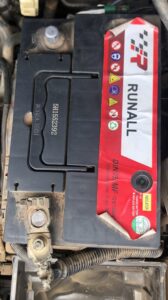
How Long Do Car Batteries Last
A lead acid battery often last between 2-5 years depending on several factors including: heat especially in hot weather or climate, corrosion at the battery terminals, loose wires at the battery terminals, frequently using electrical accessories when the engine is off, leaving your car parked for a long time without disconnecting the battery, a faulty alternator, and frequent short trips that doesn’t allow the alternator to properly charge your car battery.
- Regularly clean your car battery terminal properly to prevent corrosion. A White deposit indicates evaporated electrolyte or sulfation while a Blue/Green deposit indicates corrosion of copper clamps or copper wires.
- Drive longer to allow the alternator to fully charge your car battery.
- Disconnect cables from the battery terminals if the vehicle is unused for extended periods.
- Test battery terminals for regularly for charge.
How To Test Car Battery
Simply use a multimeter to test a car battery to check how many volts is a car battery and the working condition of the battery. To begin:
- Connect the black probe or negative lead into the COM (common) port
- Connect the red probe or positive lead into the \(V\Omega mA\) (Voltage) port.
- Check the reading on your multimeter. A good battery will display a reading of 12.6V – 12.8v and a higher reading of 13.8v to 14.8v for a charging battery. A reading below <12V is a sign of a weak or bad battery.
What Causes a Car Battery to Drain Quickly?
If your car battery drain quickly:
- Replace a faulty or bad alternator.
- Ensure you don’t turn car accessories on when car ignition is off to prevent voltage drain.
- Replace weak and old car battery.
- Clean corroded battery terminals.
- Fix loose battery connection.